

Belts for the Dynafile® 14000 and Other 1/2" x 24" Air Files
Measuring 1/2 inch wide by 24 inches long (13 x 610 mm), these air file sanding belts fit compatible air files and mini belt sanders, including the Dynabrade® Dynafile® 14000 with its standard contact arm. Other compatible tools include the Dynafile III 15420, Chicago Pneumatic® CP5080-4200D24, and JET JAT-752.
Choosing an Abrasive
| Abrasive | Use It For | Grits |
|---|---|---|
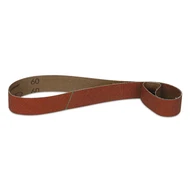
| Aluminum Oxide | General grinding, deburring, and finishing on steel, cast iron, and other ferrous metals | 40 to 400 |
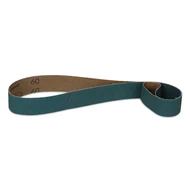
| Zirconia | Heavier stock removal on steel, stainless, and non-ferrous metals; open coat, wet or dry | 36 to 120 |
| Ceramic | Grinding and deburring on stainless, nickel, cobalt, and super alloys; cool-grinding layer, wet or dry | 36 to 120 |
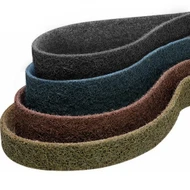
| Surface Conditioning | Cleaning, blending, and brushed finishes with minimal stock removal | Coarse to Ultra Fine |
Made for Small Parts and Tight Spots
The narrow 1/2" width gets into slots, corners, and holes that a wider belt can't reach. Machine shops, fabricators, and aerospace and shipbuilding suppliers use these belts for deburring, edge breaking, blending, and finishing on small parts. The aluminum oxide, zirconia, and ceramic belts are cut and joined in the USA from imported abrasive material. Need a size, abrasive, or grit we don't list?
For custom sanding belts and volume pricing, contact our team.
Frequently Asked Questions
What tools do these belts fit?
Any air file, file belt sander, or mini belt sander built for 1/2" x 24" belts. That includes the Dynafile 14000 on its standard 11218 contact arm, the 14010 Versatility Kit when fitted with the 1/2" x 24" contact arm, the Dynafile III 15420, the Chicago Pneumatic® CP5080-4200D24, and the JET JAT-752.
Many air files, including most Dynafile II models, run 1/2" x 18" belts instead, so check the size printed on your current belt or in the tool's manual before you order. For those tools, shop our 1/2" x 18" sanding belts.
Which abrasive should I start with?
For general deburring and finishing, start with aluminum oxide. Step up to zirconia for heavier stock removal, or to ceramic for stainless and hard, heat-sensitive alloys. Use surface conditioning when you need to clean or blend without removing much material.
What's the difference between zirconia and ceramic air file belts?
Both grains are self-sharpening. Ceramic is made for stainless and other hard or heat-sensitive alloys, with a cool-grinding layer, and it needs firm, steady pressure to keep cutting. Zirconia is built for heavier stock removal, and its open coat helps reduce clogging on non-ferrous metals like aluminum, brass, and copper.
Can I run these belts wet?
The zirconia and ceramic belts can be run wet or dry.
Dynabrade® and Dynafile® are registered trademarks of Dynabrade, Inc., and Chicago Pneumatic® is a registered trademark of Chicago Pneumatic Tool Company LLC. JET is a trademark of its owner. Empire Abrasives is not affiliated with or endorsed by these companies. Tool names are used only to describe belt compatibility.