
Key Takeaways
- ✓ The Milk Myth: Drinking milk does not prevent respiratory issues caused by welding; it is a debunked industrial myth.
- ✓ Historical Origin: In the early 1900s, workers in lead smelting and paint factories were given milk to slow lead absorption in the stomach via ingestion.
- ✓ Inhalation vs. Ingestion: Modern welding fumes are inhaled into the lungs, where dietary calcium in the stomach provides no protection.
- ✓ False Security: Relying on milk can create a false sense of security, potentially leading to increased fume exposure and serious health hazards.
- ✓ Proven Protection: Only engineering controls like ventilation and NIOSH-approved respirators (P100 or PAPR) provide scientifically proven protection.
- ✓ Symptom vs. Damage: Milk may soothe nausea or dry throat—leading to a placebo effect—but it does not fix or prevent actual lung damage.
Why Should Welders Drink Milk?
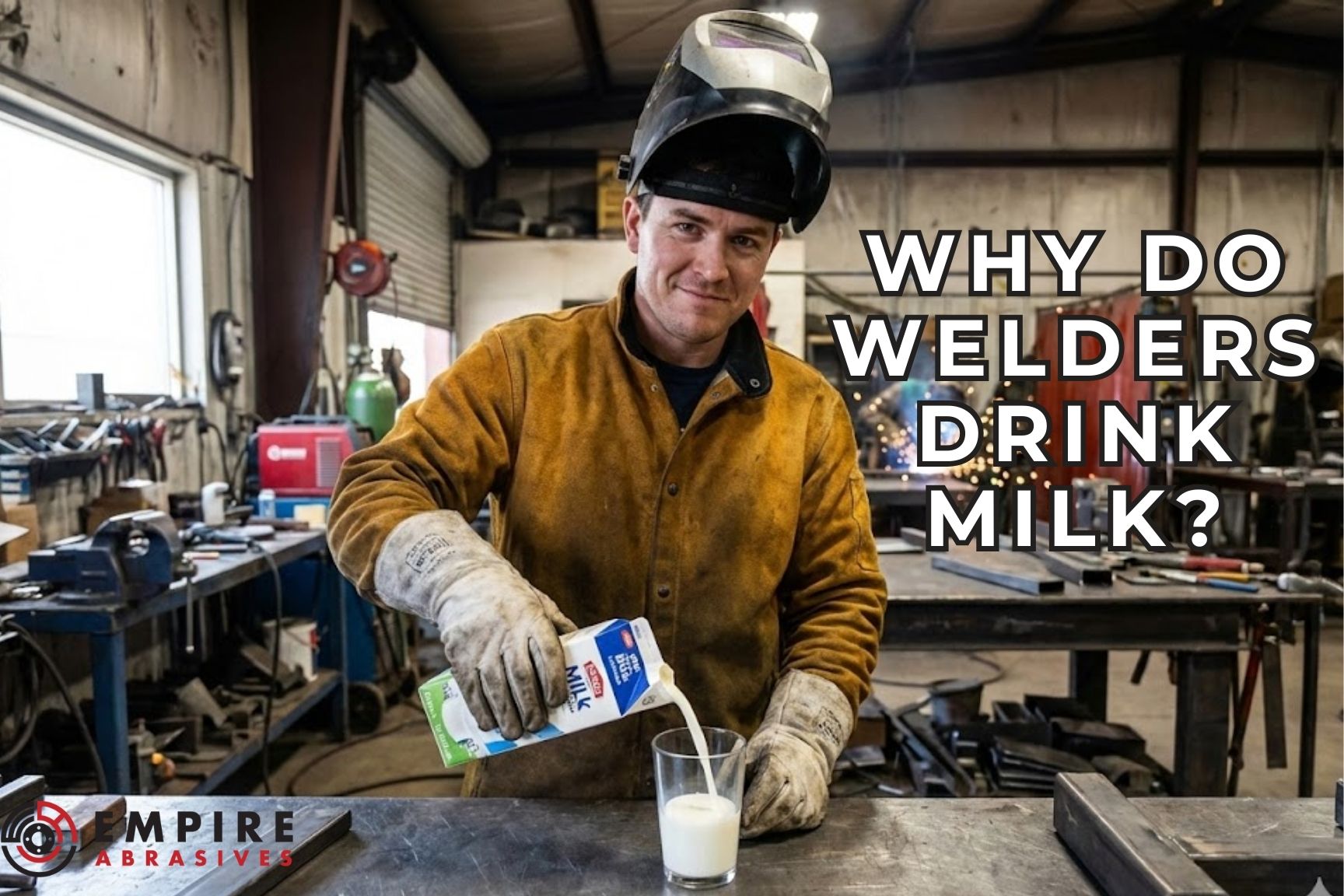
Most of us at Empire Abrasives do love starting our mornings with a bowl of milk covered cereal. If you enjoy the taste of a cold glass of milk after burning rod all day, more power to you, but there's some pretty basic reasons why welders should drink milk:
- They like the taste
- They want to get some protein, calcium, or vitamin D into their diet
- They think a milk mustache is stylish
While we’re all for the dairy, we’re strictly against misinformation that puts welders' health at risk. Here's the main reason welders should NOT drink milk:
- They think it will protect them from metal fume fever or cancer
Why Some Welders Think Milk Helps With Fumes
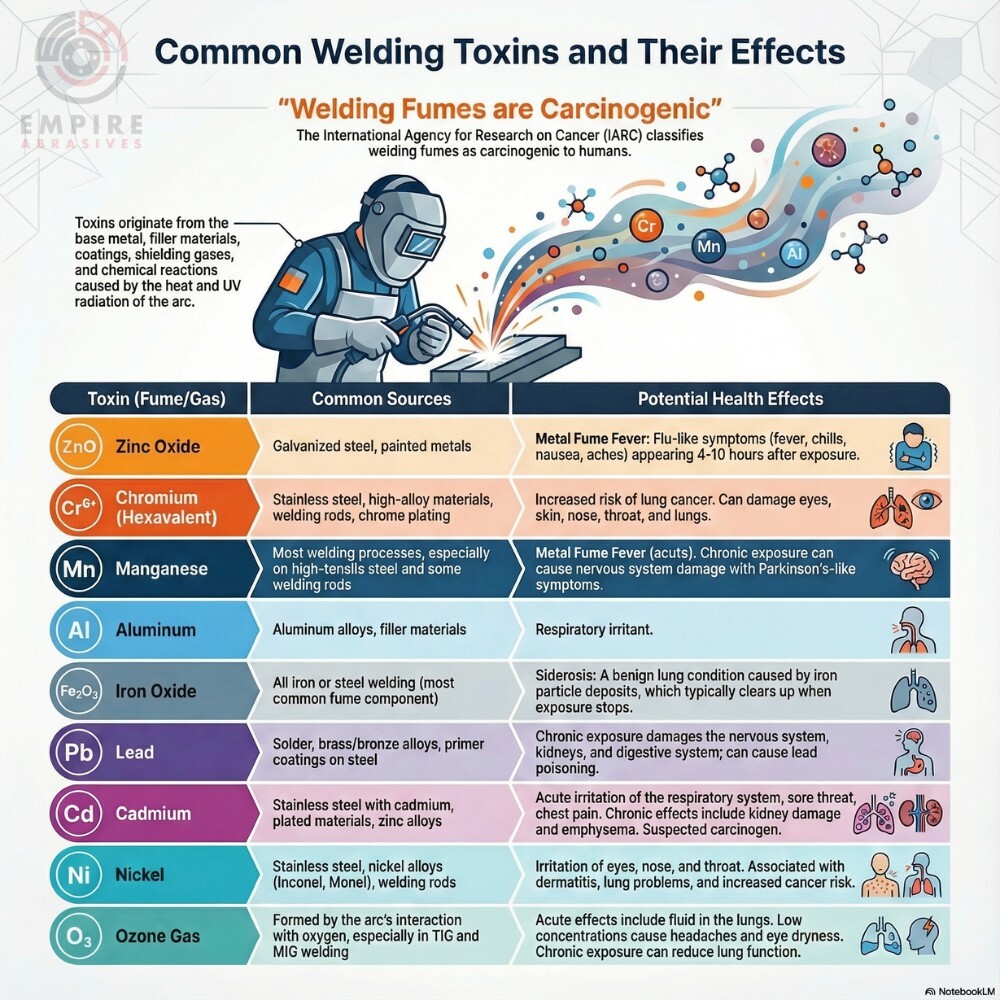
Some advice that has been passed down to welders for generations is that drinking milk before welding can protect them from developing ailments like metal fume fever (galvanize poisoning) or lung cancer.
When welding metals like galvanized steel and iron, toxins get released into the air. Breathing these toxins in can be a serious health hazard, especially over the course of a long career. The theory is that drinking milk before welding will flood your body with calcium, making it so your body is unable to absorb heavy metals.
Does Milk Really Protect Welders from Toxic Fumes?
No.
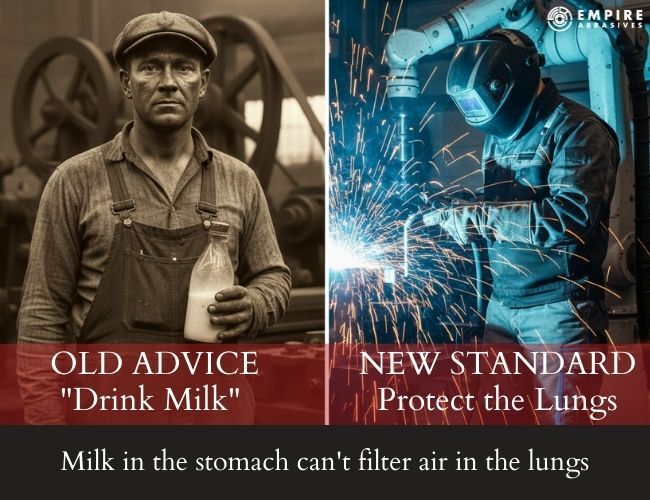
In the early 1900’s workers in lead smelting plants and paint factories were given free milk by their bosses. There was some actual evidence that milk helped with lead poisoning, but only through ingestion, not inhalation. It was even advised in 1911 U.S. Bureau of Labor reports to provide milk as a way to reduce lead absorption in the stomach
There is speculation about the idea that the calcium in milk will protect welders likely came from assuming the lead/calcium research applied to all heavy metals, and ignored the fact that the studies stated it was only helpful for digestion and not inhalation of lead.
Unfortunately, there is no evidence that shows any connection between milk and preventing welding-related illnesses.
Milk does genuinely mitigate some stomach-related symptoms, like nausea, which can lead to a placebo effect. In these cases, it is treating a symptom, not fixing the actual damage.
How to Actually Reduce the Risk of Metal Fume Fever and Cancer Prevention for Welders
To prevent health issues from welding like galvanize poisoning or long-term respiratory issues, you need to stop the fumes from entering your lungs in the first place. This applies to the people doing the actual welding and anyone nearby. We’ll call them secondhand welders.
- Engineering Controls (Ventilation and Extraction) - Methods include Source Capture (local exhaust systems like fume extraction guns and hoods close to the source), Mechanical Ventilation (systems that exhaust fumes outside), and General Ventilation (natural or forced air movement, requiring workers to stay upwind in open environments).
- Material Substitution and Preparation - Substitute high-fume generating or toxic materials with less hazardous alternatives; remove coatings such as paint, solvents, rust inhibitors, and especially zinc (galvanizing) from the metal surface prior to welding; and do not weld surfaces wet with degreasing solvents or near degreasing baths.
- Work Practices and Hygiene - Welders should practice good body positioning, ensure workplace cleanliness, maintain personal hygiene (wash hands and face before eating, drinking, or smoking), and properly manage contaminated clothing.
- Personal Protective Equipment (PPE) - Always use proper respiratory protection, including NIOSH-approved elastomeric half-mask respirators with P100 filters, fit testing, maintenance training, and considering Powered Air Purifying Respirators (PAPRs) for high-fume or long-duration tasks.
Sources Used in This Article
- Lead Poisoning: Historical Aspects of a Paradigmatic "Occupational and Environmental Disease" - PMC
- Full text of Bulletin of the United States Bureau of Labor, Nos. 1 - 100 : July 1911 : Bulletin of the United States Bureau of Labor, No. 95, Volume XXIII
- A pharmacokinetic model of lead absorption and calcium competitive dynamics - PMC
- Does drinking milk protect you from toxic welding fumes? | Cancer Council
- Controlling Hazardous Fume and Gases during Welding - OSHA
- The Best Abrasives for Stripping Paint from Metal
Last Update: 1/6/2026