
When you grind metal with flap discs, they are being put into some extreme conditions to create those sparks. In simple terms, a flap disc is just pieces of cloth-backed sandpaper glued to a backing plate. That doesn’t mean you can just glue your own sandpaper to a disc and make it work right.
The flap disc construction had to be designed to not only provide you with a great abrasive for grinding but also withstand intense grinding conditions.
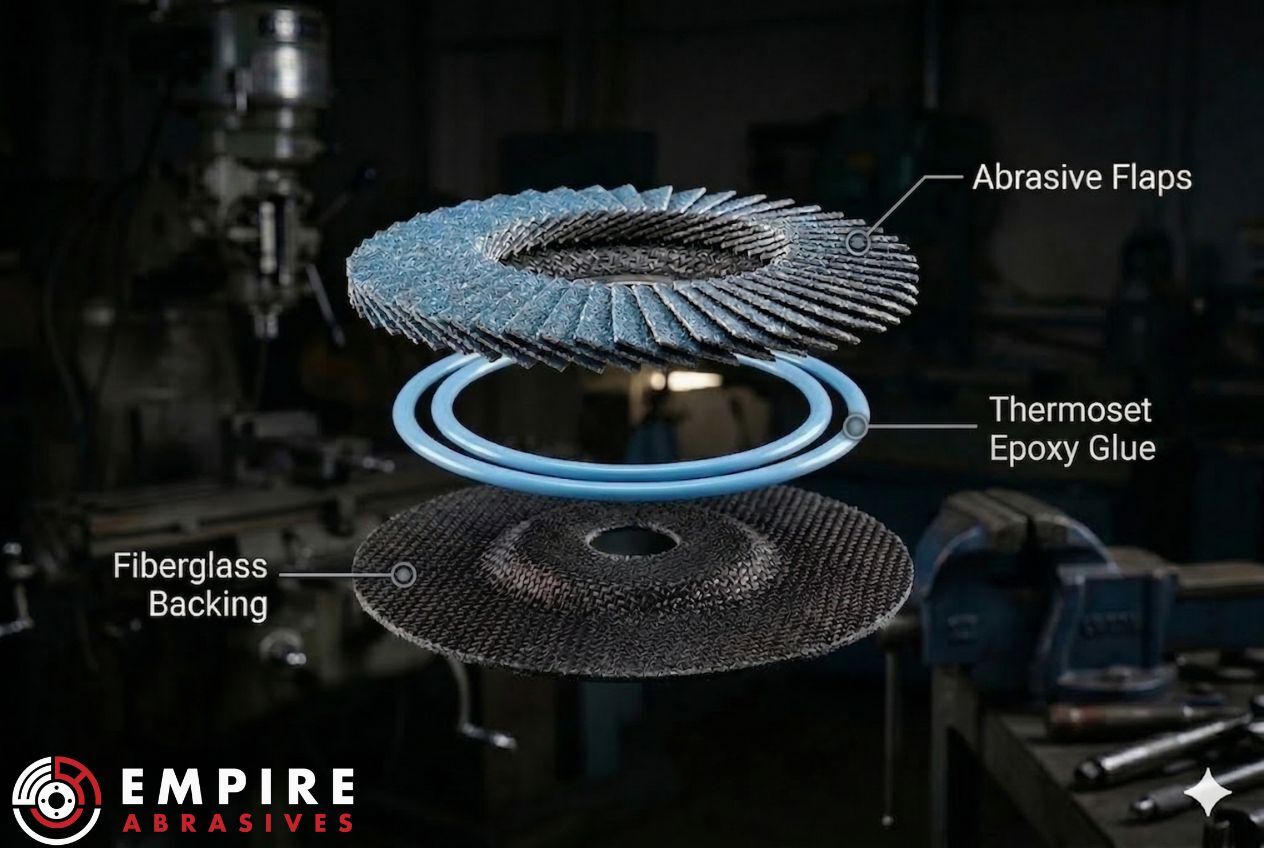
While there are various types of flap discs (T27, T29, mini, ceramic, curved edge, etc.), they all have the same structure: backing plate + epoxy glue + layers of abrasive flaps.
The Foundation: Backing Plate
The backing plate is more important than you may think. The manufacturer needs to use the right material and design to be able to work at high speeds.
Materials
The majority of backing plates are constructed with fiberglass or plastic, with other materials used less often for specific use-cases. The choice of material affects rigidity/durability, flap adhesion, and vibration resistance.
-
Fiberglass is the most used backing material for flap discs. It is made out multiple mesh layers of fiberglass pressed together. The material is strong, can absorb some pressure, and the surface provides great adhesion for the epoxy glue.
-
Plastic (usually made of nylon) is often used for mini flap discs, trim-away discs, and cheaper full size discs. Unlike fiberglass, plastic has more give and softens at lower temperatures. The added give can be great for grinding on contours, but each time it flexes, micro-movements occur where the epoxy bonds with the plate, making the bond weaker and weaker. That flexibility can also lead to more vibration with larger discs. Since plastic softens at lower temperatures than fiberglass, that too can reduce long-term bond integrity under sustained heavy use.
The difference shows up under load…more vibration, faster bond degradation, and a shorter disc life. For light work or occasional use, it's fine to use plastic. For production grinding, stick with fiberglass.
Vibrations
The material used, quality of the materials, and the uniformity in design all have a huge effect on the vibration of the disc in use. Plastic backing on a large flap disc…more vibration. Cheap/thin nylon plate…vibrations. Poor manufacturing…vibrations.
Not only do vibrations make grinding more difficult and tiring, but vibrations can lead to breaking down the epoxy holding the discs on. That is why you want to make sure you’re sourcing high quality fiberglass backed flap discs for heavy duty work.
The Bond: Industrial Epoxy
The flaps get “glued" onto the backing plates. We’re not talking about Elmer’s Glue here. The glue needed to attach, and hold, flaps to a backing plate is a specialized epoxy designed for industrial "toughness".
Most flap disc manufacturers use a one-part thermoset epoxy. Quality adhesives for flap discs are made to withstand:
-
High temperature - needs to resist heat building from friction without softening or breaking down/releasing its hold on the flaps.
-
Peel and shear forces - centrifugal forces at 12,000+ RPM pull every flap outward simultaneously (peel). Grinding pressure drags them sideways (shear). The epoxy has to be strong enough to resist both at the same time.
-
Vibration fatigue - Every grind vibrates the disc and puts stress on the bond over and over, which is why cheap epoxy fails before the abrasive wears out
-
Impact loading - Every time the disc catches or skips, there's a sharp impact that the epoxy has to absorb
The Flaps Themselves: Why Cloth Backing Matters
The flaps aren't just the abrasive. Their material, arrangement, and wear pattern are all part of what keeps the disc intact under grinding conditions.
Cloth backing -
Coated abrasives typically come with cloth/polyester, paper, or film backings. Cloth is the important one for flap discs. The woven backing allows the epoxy to soak into the fibers and grip it mechanically, creating a much stronger bond than a smooth or paper backing would allow.
For more details, consult our guide "Types of Coated Abrasives Backing"
The Overlapping Design -
Flaps are attached in an overlapping radial pattern. This creates a larger total surface area for the glue to grab onto. This design also means that grinding force is distributed across multiple flaps at once instead of putting all the stress on one.
Self-Renewing Wear Pattern -
This is actually built into the design on purpose. As abrasive grains dull and flaps wear down, they tear away cleanly and expose fresh ones underneath. The gradual wear preserves the epoxy bond because you're not constantly straining the same attachment points.
Flap Density -
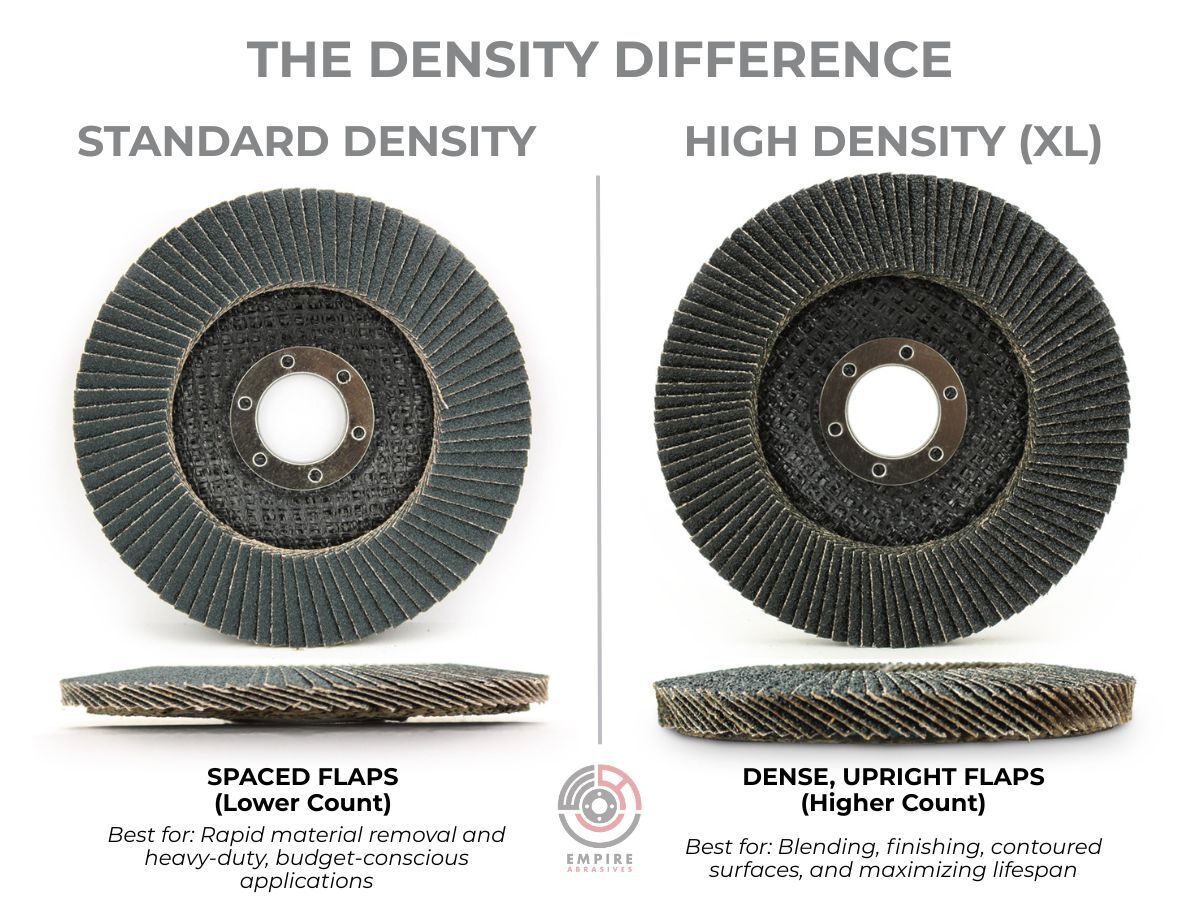
Higher flap density (more flaps per square inch) creates better load distribution and longer flap retention. When you have more flap material packed on the backing plate, each individual flap experiences less stress per grind. More flaps share the load, so each individual bond takes less stress per grind and the epoxy stays fresher longer.
High Density does not always mean better. High density flap discs not only last longer, but have more give, making the better for contoured surfaces. Standard-density flap discs thinner and more rigid, which make them better for aggressive, high-speed material removal.
How It All Works Together
A well-built flap disc isn't held together by any single component. It's the combination of all three working as a system.
-
The fiberglass backing plate gives the epoxy a rigid, stable surface that doesn't flex or soften under heat.
-
The epoxy itself has to be specifically formulated to resist peel and shear forces simultaneously, and applied with enough coverage that there are no weak points in the bond.
-
The cloth backing on each flap gives the epoxy something to mechanically grip…soaking into the woven fibers rather than just sitting on a smooth surface.
When all three are right, the disc wears down evenly and the flaps stay on until the abrasive is actually spent. When any one of them is cheaply made, that's where failure starts…and usually before you've gotten your money's worth out of the disc.
What This Means When You're Buying
A cheaper flap disc might look identical to a professional-grade one right out of the box. The difference shows up under load; flaps ejecting early, more vibration, a disc that's done long before the abrasive is worn out.
In a production environment, that's not a savings. You're paying for abrasives you never used. Sourcing quality-built discs — fiberglass backing, industrial-grade epoxy, proper flap density for the job — is a cost-per-use decision, not a price-per-disc one.
Find the Right Flap Disc for Your Job
Not sure which flap disc is the right fit for your application? Shoot us an email, chat on-site with our team of abrasives experts, or give us a call at 1-800-816-3824 from 9–5 EST. We're happy to help you dial in the right disc for the job.
Further Reading
From Empire Abrasives
-
Flap Disc Variations: Grinding, Blending, Polishing — Learn about specialty flap disc types and their ideal applications for different finishes.
-
Flap Discs vs. Grinding Wheels: A Comparison — Understand the key differences between flap discs and grinding wheels to choose the right tool.
-
Flap Discs Uses and Differences Guide — Explore various flap disc applications and learn how to select the best one for your job.
About the Author
Mike Germade
Mike is the Content Specialist for Empire Abrasives, where he has spent over five years researching and writing expert resources on sanding, grinding, and polishing tools. He regularly tests products on his own woodworking and metalworking projects, combining hands-on experience with a passion for clear content that helps makers and DIYers succeed. He continually updates his work to reflect the latest products, safety standards, and industry best practices.
Last Update: 4/13/2026
Some images on this page may be AI-generated for illustrative purposes.